





Introduction: The Evolution of CRM in the Digital Economy
Customer Relationship Management (CRM) has evolved far beyond simple contact databases and manual sales tracking. In the modern digital economy, businesses require intelligent CRM automation systems that streamline pipelines, enhance customer engagement, and provide predictive revenue insights.
With increasing competition and complex customer journeys, organizations can no longer rely on fragmented sales tools. Instead, they are adopting advanced CRM and revenue automation platforms that centralize customer data, automate repetitive tasks, and enable data-driven sales strategies.
Understanding CRM Automation in Modern Enterprises
CRM automation refers to the use of intelligent software to manage customer interactions, sales processes, and revenue operations with minimal manual intervention. Unlike traditional CRM tools, modern systems incorporate automation, analytics, and AI-driven insights.
Platforms designed with automation capabilities, such as SalesEnginePro within integrated environments like Synclo, allow organizations to unify customer data, sales performance metrics, and revenue forecasting into a cohesive operational framework.
Streamlining Sales Pipelines with Intelligent Systems
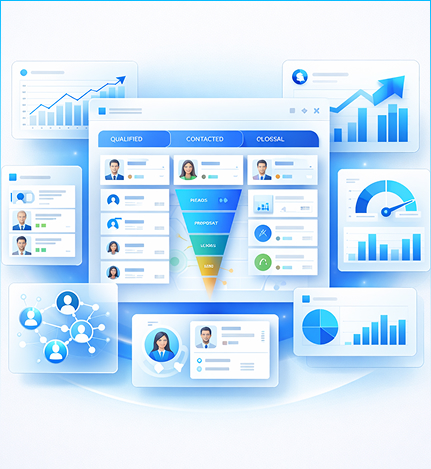
One of the most significant advantages of CRM automation is pipeline optimization. Sales teams often struggle with manual lead tracking, delayed follow-ups, and inconsistent deal management. Automated CRM systems eliminate these inefficiencies by creating structured and transparent sales workflows.
Key automation features include:
- Automated lead capture and scoring
- Workflow-based deal tracking
- Automated follow-ups and reminders
- Real-time pipeline visibility
These capabilities enhance productivity while ensuring that high-value opportunities are never overlooked.
Revenue Forecasting Through Predictive Analytics
Predictive analytics has become a cornerstone of modern revenue management. Advanced CRM platforms analyze historical sales data, customer behavior, and market trends to generate accurate revenue forecasts.
This allows leadership teams to:
- Plan budgets more effectively
- Allocate resources strategically
- Identify revenue growth opportunities
- Reduce forecasting inaccuracies
When CRM systems operate within integrated business ecosystems such as Synclo, revenue data can be aligned with financial and operational insights for more comprehensive strategic planning.
Enhancing Customer Engagement and Personalization
Customer expectations have shifted dramatically in the digital age. Modern consumers expect personalized interactions, timely communication, and consistent experiences across multiple channels. CRM automation platforms enable businesses to deliver highly personalized engagement by leveraging centralized customer data.
Organizations can:
- Segment customers based on behavior
- Personalize marketing and sales outreach
- Track interaction history across channels
- Improve customer retention strategies
This data-driven personalization significantly enhances customer satisfaction and long-term loyalty.
Sales Productivity and Workflow Optimization
Sales productivity is directly influenced by the efficiency of internal workflows. Manual administrative tasks often consume valuable time that could be spent on strategic selling. CRM automation reduces administrative burden by automating repetitive processes such as data entry, reporting, and follow-up scheduling.
This enables sales teams to focus on relationship building, deal closure, and strategic revenue growth.
Integration of AI in CRM and Revenue Systems
Artificial intelligence is playing a transformative role in CRM and revenue automation. AI-powered CRM systems provide intelligent lead scoring, sales recommendations, and predictive customer insights.
Integrated intelligent platforms like Synclo further enhance CRM capabilities by connecting sales data with operational and financial intelligence, enabling organizations to make holistic, data-driven decisions.
The Future of CRM Automation and Revenue Intelligence
The future of CRM lies in intelligent automation, predictive analytics, and unified customer intelligence platforms. Businesses are increasingly adopting scalable CRM systems that support omnichannel engagement, real-time analytics, and automated revenue workflows.
Emerging trends include:
- AI-driven sales forecasting
- Intelligent customer journey mapping
- Automated revenue analytics dashboards
- Predictive lead conversion modeling
These innovations will continue to redefine how organizations manage customer relationships and drive revenue growth.
Conclusion: Intelligent CRM as a Growth Catalyst
CRM automation and revenue intelligence systems have become essential tools for modern enterprises seeking sustainable growth and competitive advantage. By integrating automation, analytics, and AI-driven insights, businesses can optimize sales processes, enhance customer engagement, and improve revenue predictability.
As organizations embrace digital transformation, intelligent CRM systems operating within integrated environments like Synclo provide the scalability and intelligence required to navigate complex sales ecosystems. The future of sales is not just automated — it is intelligent, predictive, and deeply customer-centric.